

Ice Dams
Ice Dams = Heat Loss=High Utilit & Maintenance Bills!
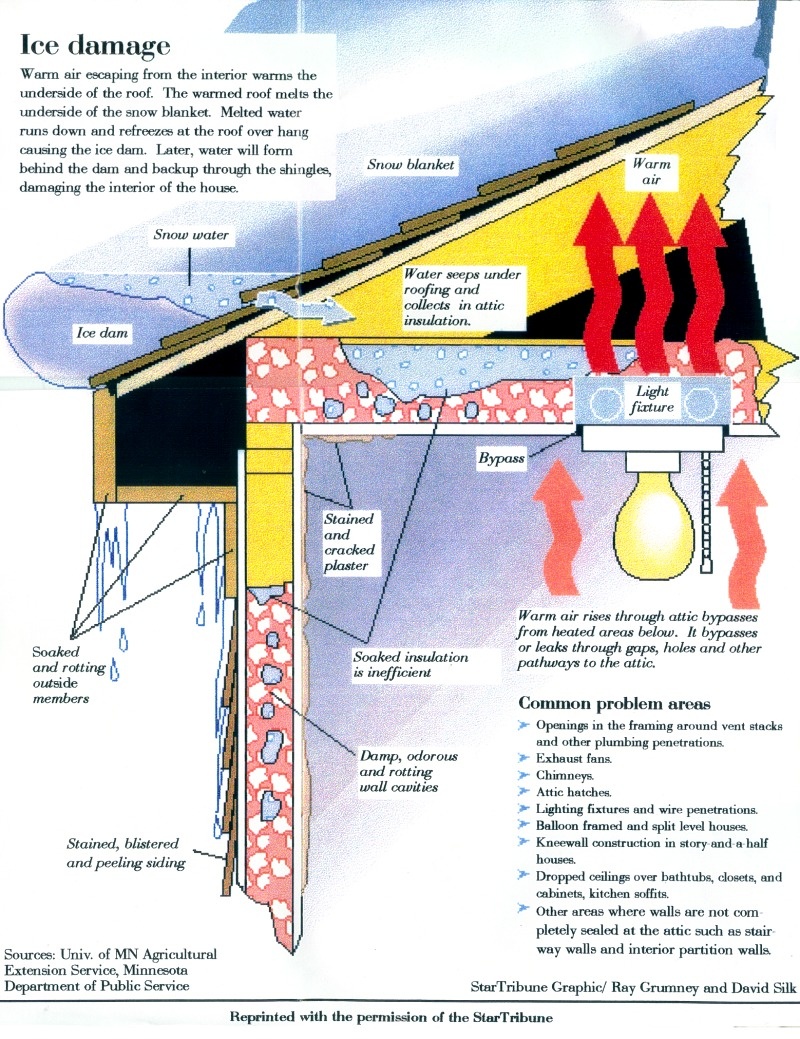
An ice dam is created under winter conditions when heated air leaks through attic bypasses into an unheated attic. This creates warm areas on the roof and melts the underside of the snow that has accumulated on your roof. The melted snow flows down the roof until it reaches a cold spot, such as the eaves, where it refreezes, forming a dam.
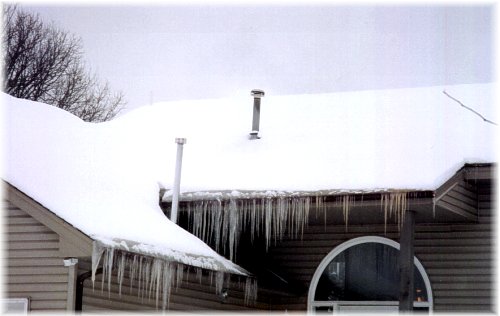
Major Ice Dams Formed Along Roofline
Behind this dam more snow melts causing the ice to keep building up. Eventually, the ice dam forces water (melted snow) to back up under the shingles, damaging the shingles, and allowing the water to leak down to the ceilings and walls below.
Additionally, ice dams may also cause mold and mildew to form in attics and on wall surfaces.
 Ice Dams Fact Sheet |
Ice dams - or ice buildup on roof eaves - are all too obvious and all too familiar to Minnesota homeowners. The shelf of ice along the eave and the icicles are clearly visible, as are the dislodged roof shingles, sagging gutters, damaged insulation, and water stains on interior ceilings and walls that are the result of ice dams.
What isn't clearly visible is what causes ice dams.
Causes of Ice Dams
In most cases, ice dams begin inside the house, when heated air leaks up into the unheated
attic. In the winter, the roof above the unheated attic is cold. When warm air leaks into the
unheated attic, it creates warm areas on the roof which in turn cause the snow on the exterior
of the roof to melt. The melting snow moves down the roof slope until it reaches the cold
overhang, where it refreezes. The process continues, causing ice to build up along the eaves
and form a dam. Eventually this dam forces the water to back up under the shingles and sometimes
into the ceiling or wall inside the home. In addition to the roof and water damage described
above, ice dams may cause structural framing members to decay, metal fasteners to corrode, and
mold and mildew to form in attics and on wall surfaces.
The Solution - Sealing Attic Bypasses
The pathways through which heated indoor air moves into the attic are called attic
bypasses. To prevent ice dams, attic bypasses must be eliminated. Ideally, attic bypasses
are eliminated - or prevented - when the home or building is constructed, since some attic
bypasses are not always accessible after construction. The Minnesota Energy Code requires
sealing the following areas to prevent air leaks:
- penetrations in the building envelope for electrical and telecommunication equipment
- electrical boxes and fan housings (such as exhaust fans)
- all exterior joints that may be a source of air intrusion
- rim joists
- lighting fixtures, including recessed lights and wire penetrations
- all plumbing and heating penetrations (including chimneys, flue pipes, and ducting)
- attic hatches
Other common sources of attic bypasses are:
- balloon framed walls and walls that span both heated and unheated spaces, such as in split level houses
- kneewall construction in story-and-a-half houses
- dropped ceilings over bathtubs, closets and cabinets, and kitchen soffits
- other areas where walls are not completely sealed at the attic such as stairway walls and interior partition walls
Other factors sometimes play a role in Ice Dams...
Complex roof construction can increase the risk of ice accumulation, such as a roof
with different surface angles that vary in their exposure to sunlight and drain into valleys.
Weather also contributes to the problem: a foot or more of snow on a well insulated roof,
combined with warm winter temperatures, can result in snow melt and ice on roof eaves. In
the latter case, applying a sidewalk snow melt product or having a roofer steam the snow
off may be the safest means of removing ice. In each case, however, the most important step
to stopping ice dams is to seal the hidden air leaks into attic spaces. If the principal
causes was "the wrong type of weather," every roof would have an ice dam. Observing unheated
garage or picnic shelter roofs confirms that weather is not a basic cause of ice dams.
Sealing Bypasses after Construction
Diagnostic services. Both builders and homeowners may seek the help of technicians
trained in using diagnostic equipment to identify sources of air leaks. A
blower door test and an
infrared scan can locate major leaks in houses and help determine whether they have been sealed
effectively.
Attic bypasses often follow long paths through building cavities before they enter the attic.
Some Non-Solutions to Ice Dams
Increasing insulation and/or roof ventilation. Adding insulation helps reduce ice dams,
but once you have reached an R-44 level, there may be little value in adding more insulation.
Adding insulation without sealing attic bypasses could actually increase the amount of air
leakage, diminishing the performance of the insulation. Roof vents are required by all building
codes and should be installed according to building code standards. They are not, however, a
solution to ice dams. One caution: using power ventilators such as attic fans or other motorized
devices can depressurize the attic, drawing warm moist air out of the house and into the attic.
FREE Estimate